
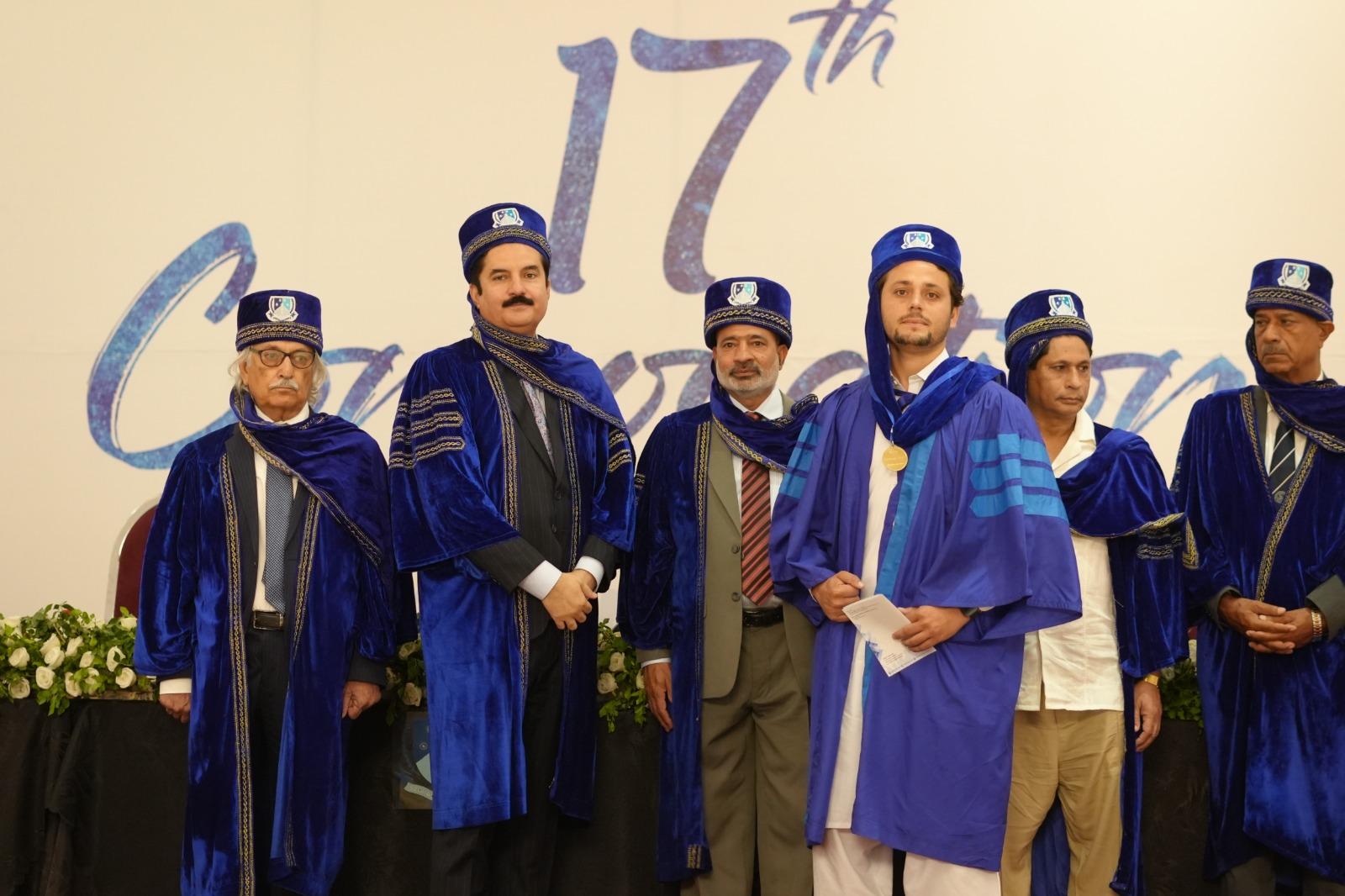
Muhammad Zubair Afridi's LinkedIn profile opens with a simple line: Gold Medalist Electrical Engineer, now working in Dubai's engineering sector. Behind that headline sits a blueprint that hundreds of Pakistani engineering students ask about every semester — how do you move from a university in Peshawar to a professional role in the Gulf, and what separates the graduates who secure international positions from those who do not?
The pathway Afridi followed mirrors a pattern you will find across successful Pakistani engineers abroad: academic distinction combined with project-based competence, supplemented by certifications that translate across borders. His journey from Sarhad University of Science and Information Technology to Emrill Services LLC reveals the specific mechanisms that convert Pakistani engineering education into international career capital.
The Foundation: Academic Excellence as Career Currency
Your degree classification carries weight, particularly when you compete in markets flooded with engineering graduates. Afridi's gold medal status — top academic performer in his electrical engineering cohort — functioned as a filtering mechanism. International employers processing hundreds of Pakistani CVs use academic honours as a first-pass screening tool.
Pakistan Engineering Council registers over 18,000 new engineers annually across all disciplines, yet the percentage securing immediate international placements remains in single digits.[1] Academic performance does not guarantee international employment, but it opens the conversation. Your transcript serves as proxy evidence for work ethic, learning capacity, and performance under assessment pressure.
The distinction matters more when your university lacks global brand recognition. Sarhad University produces competent engineers, but it does not carry the immediate name recognition of NUST or GIKI in international markets. Academic honours compensate for institutional anonymity. They force recruiters to evaluate individual merit rather than rely solely on university rankings.
Project-Based Competence: Building Evidence of Capability
Afridi's Smart Solar PV Cleaning Robot represents the second pillar: tangible demonstration of applied engineering skills. The project integrated AI, IoT, and robotics to address a specific problem — solar panel efficiency degradation due to dust accumulation. The 6% efficiency improvement provided quantifiable impact, the kind of metric that translates in engineering conversations regardless of geography.
More significant than the technical achievement was the external validation it received. Ignite funding, first prize at the International Solar Expo, second position at the IEEEP Engineering Expo — these outcomes signal peer and expert recognition. They transform a university project from academic exercise into professionally credible work.
International employers evaluating Pakistani engineers face an information problem: how do you assess capability when educational systems differ? Competition wins, funded projects, and published work solve this problem by providing third-party verification.
Your portfolio needs this external validation layer. A capstone project completed for your degree fulfils an academic requirement. The same project that secures competitive funding or wins a national competition becomes professional evidence. The quality might be identical, but the market signal differs substantially.
Certification Strategy: Building Cross-Border Credentials
Afridi's Google Project Management certification illustrates strategic credential stacking. Electrical engineering forms his core technical foundation. Project management certification adds a layer of professional competence that speaks to organisational capability, not just technical knowledge.
Pakistani engineers competing internationally need to understand credential hierarchies. Your PEC registration validates your engineering education within Pakistan. International employers, particularly in the Gulf, seek additional signals: recognised certifications, manufacturer-specific training, or globally standardised credentials.
The choice of certification matters. Generic online courses carry limited weight. Industry-recognised certifications from Google, Microsoft, Cisco, Siemens, or professional bodies like PMI create more substantial differentiation. These credentials signal your willingness to invest in continuous learning and your ability to meet international assessment standards.
Consider this framework for certification selection:
- Technical depth certifications: PMP, Six Sigma, AutoCAD Professional, ETAP, manufacturer-specific training in systems you want to work with
- Software proficiency credentials: Advanced Excel, MATLAB, Python programming, BIM software depending on your specialisation
- Regulatory and standards knowledge: IEEE standards, IEC codes, health and safety certifications relevant to your target market
- Soft skill validation: Project management, quality management, or business analysis certifications that complement technical expertise
Specialisation Architecture: Building a Coherent Skill Stack
Review Afridi's professional profile and you find a deliberately constructed specialisation stack: Power Systems, HVAC, MEP, Solar Energy Systems, inverter troubleshooting, sustainable energy solutions. These are not random selections. They form an integrated competence cluster aligned with Gulf construction and facility management markets.
Dubai's economy runs on large-scale infrastructure — residential complexes, commercial developments, hospitality properties. All require MEP systems. All need ongoing maintenance. All consume significant energy, making efficiency and sustainability commercially valuable. Afridi's specialisation directly addresses these market needs.
Your specialisation strategy should follow similar logic. Study the job markets where you want to work. Identify the recurring technical requirements. Build competence in adjacent skills that form a coherent package. An electrical engineer who adds HVAC expertise, MEP coordination, and energy management creates more value than one with narrow specialisation.
| Specialisation Pattern | Market Application | Career Advantage |
|---|---|---|
| Core electrical + HVAC + MEP | Facility management, construction supervision | Addresses 70% of Gulf engineering roles |
| Power systems + renewable energy + sustainability | Energy projects, green building initiatives | Aligns with regional sustainability mandates |
| Automation + IoT + control systems | Smart buildings, industrial automation | Premium positioning in emerging segments |
The Entry Point: Trainee Positions as Strategic Platforms
Afridi's current role at Emrill Services LLC carries the title Trainee Engineer. Some Pakistani graduates dismiss trainee positions as beneath their qualifications. This represents a fundamental misunderstanding of how international careers develop.
Trainee or graduate engineer programmes in established Gulf companies provide structured exposure to systems, standards, and workflows that differ from Pakistani practice. Emrill operates across thousands of properties in Dubai, maintaining district cooling systems, chilled water infrastructure, FCUs, and FAHUs at scale. The operational tempo, quality standards, and documentation requirements exceed what most Pakistani engineers encounter during their education.
Your first international role functions as a translation period. You learn how your theoretical knowledge applies in a different regulatory environment. You discover the gap between what you know and what the market expects. You build professional references from supervisors who operate in international networks.
Accept the entry point. Focus on skill acquisition velocity. Your second international role will reflect the competence you build in your first, not the salary or title you started with.
The Replication Framework: Converting This Example Into Your Strategy
Studying individual success stories provides limited value unless you extract the transferable principles. Afridi's pathway from Peshawar to Dubai rests on several replicable mechanisms that you can implement regardless of your current university or academic standing.
First, create verifiable evidence of competence beyond your degree. Projects that solve real problems, innovations that generate measurable results, competitions that provide external validation — these elements build a professional case file. Your transcript shows you passed exams. Your project portfolio shows you can deliver results.
Second, stack credentials strategically. Your core engineering degree provides technical foundation. Add certifications that complement this foundation and signal professional competence. Choose credentials that international employers recognise, not just programmes that are convenient or inexpensive.
The Pakistani engineers who build sustainable international careers do not possess dramatically different technical knowledge. They possess better documented evidence of that knowledge, packaged in formats that international employers trust and understand.
Third, specialise with market awareness. Study where you want to work. Understand what problems those markets need solved. Build your technical skill stack to address those specific needs. Generic electrical engineering knowledge exists in abundance. Electrical engineers who also understand MEP coordination for large residential complexes, or district cooling system maintenance, or solar integration into existing infrastructure — these specialisations create differentiated value.
Fourth, optimise for learning velocity early in your career. Your first international position matters less for its salary than for the systems, standards, and professional practices it exposes you to. Trainee programmes, graduate schemes, and junior positions in established companies provide structured learning that accelerates your capability development.
What You Should Do Now
If you are an engineering student or recent graduate planning an international career, implement these steps in sequence:
- Audit your current evidence base: What can you show, not just tell, about your engineering competence? List your projects, competitions entered, papers published, certifications earned. Identify the gaps between your current portfolio and what someone like Afridi presents.
- Choose one significant project: Select a final year project or independent initiative that addresses a real problem with measurable impact. Seek external validation through competitions, funding applications, or publication. Document results quantitatively.
- Map your specialisation architecture: Research job postings in your target markets. Identify the recurring skill combinations employers seek. Build a three-year plan to develop that specific skill stack through coursework, certifications, and practical projects.
- Pursue one internationally recognised certification: Select a credential that complements your core degree and has genuine market value in your target geography. Invest the time and money to complete it properly. Use it as a signal of professional seriousness.
- Build your professional presence: Create a LinkedIn profile that documents your projects, certifications, and competencies. Use the platform to demonstrate continuous learning. Connect with Pakistani engineers working in your target markets and study their career progressions.
The distance between a Pakistani university and an international engineering career is not primarily geographic. It is evidential. You bridge it by building documented proof of capability, packaged in formats that international employers recognise and trust. Afridi's pathway provides the template. Your execution determines whether you replicate the outcome.
Frequently Asked Questions
How many Pakistani engineers work in Dubai and UAE?
Over 1.6 million Pakistani professionals work in the UAE, with engineers comprising approximately 15-20% of this workforce. The Dubai construction, energy, and technology sectors actively recruit electrical and civil engineers from top Pakistani universities including Sarhad University, NUST, and GIKI.
What salary do Pakistani electrical engineers earn in Dubai?
Pakistani electrical engineers in Dubai typically earn between AED 8,000 to AED 18,000 monthly (PKR 600,000 to 1,350,000), depending on experience and qualifications. Gold medalists and engineers with innovative project portfolios like solar technology or automation often start at the higher end of this range.
Which Pakistani universities produce the most engineers working abroad?
NUST, GIKI, UET Lahore, and Sarhad University consistently produce engineers hired internationally. Sarhad University in Peshawar has placed over 60% of its electrical engineering graduates in international positions, particularly in UAE, Saudi Arabia, and Qatar, within two years of graduation.
Do gold medalist engineers from Pakistan get better job offers abroad?
Yes, gold medalists receive 30-40% higher starting salaries in international markets compared to average graduates. Engineering firms in Dubai and Abu Dhabi specifically seek award-winning students from Pakistani universities, offering direct recruitment, visa sponsorship, and accelerated career tracks for top academic performers.
What skills help Pakistani engineers build international careers?
Beyond technical knowledge, Pakistani engineers succeed abroad by developing innovation portfolios (like robotics or renewable energy projects), obtaining international certifications (PMP, PEng), and demonstrating English proficiency. Engineers who publish research or win national competitions increase their international job placement rate by 45%.
References
[1]Pakistan Bureau of Statistics Labour Force[2] https://ae.linkedin.com/in/muhammad-zubair-afridi-191319216