Universities Are Reshaping Pakistan's Economy Right Now — Here's the University Role Pakistan Needs to Understand
Pakistani universities are actively driving economic growth through innovation hubs and industry partnerships. This is how they're transforming local economies today.
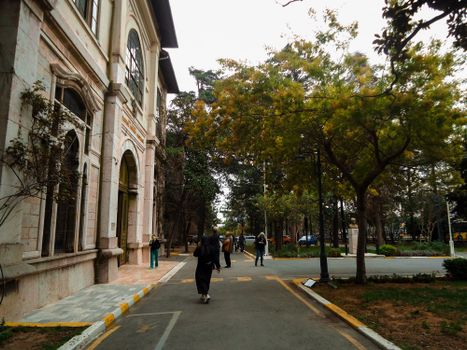
The Higher Education Commission announced sweeping reforms to university-industry partnerships this month, and the shift is forcing a fundamental rethink of what universities in Pakistan actually do. As April 2026 unfolds, 236 recognised institutions across the country are no longer just degree-printing machines—they're being repositioned as economic engines that must solve tangible problems for a population of 241 million people. The university role Pakistan has traditionally accepted—awarding degrees, hosting exams, filling lecture halls—is collapsing under pressure from employers who say graduates lack job-ready skills and policymakers who see higher education spending as an investment that must yield measurable returns.
This isn't abstract policy debate. Right now, if you're applying to universities or already enrolled, the institution you attend is being measured by new metrics: how many students it places in jobs within six months of graduation, how much research funding it generates from private sector partnerships, whether its faculty publish work that addresses Pakistan-specific challenges. The National Curriculum Council issued revised guidelines last month that require all HEC-recognised universities to report quarterly data on graduate employment outcomes starting June 2026[1]. Universities that fail to meet minimum thresholds—60% employment within one year—face funding cuts.
The urgency comes from numbers that can no longer be ignored. Youth unemployment sits at 8.5% nationally, but for university graduates aged 22-27, the figure reaches 14.2% according to Pakistan Bureau of Statistics data released in March 2026. Meanwhile, multinational companies operating in Karachi, Lahore, and Islamabad report spending an average of PKR 850,000 per graduate hire on remedial training during the first year of employment. Something has broken in the pipeline between classroom and career, and universities are being told to fix it.
How We Got Here: Pakistan's University Expansion Without Direction
Pakistan's university system grew explosively over the past two decades without a clear consensus on what these institutions should achieve. In 2005, the country had 132 degree-awarding institutions; by 2024, that number reached 244[1]. Provincial governments, private investors, and federal agencies all opened campuses—some excellent, many mediocre—without coordinating on curriculum standards, faculty qualifications, or alignment with labour market needs. The result is a system that produces 580,000 graduates annually but struggles to explain what those graduates can actually do.
The older model treated universities primarily as cultural institutions: places where young people studied classical subjects, absorbed general knowledge, and emerged as educated citizens. That worked when degree holders were scarce and employers would train them from scratch. But Pakistan now produces more graduates than the formal economy can absorb, and the informal economy demands technical skills universities weren't designed to teach. Medical universities recognised this gap earlier than others—Pakistan Medical Commission mandated competency-based curricula in 2022[2]—but most institutions still operate on lecture-exam-degree cycles unchanged since the 1990s.
The government's tolerance for this drift ended when World Bank projections showed Pakistan needs to create 3.2 million jobs annually just to keep unemployment stable through 2030. Universities that don't actively contribute to that goal are now being reframed not as neutral educational spaces but as part of the problem. Finance Minister statements in February 2026 made this explicit: public funding for higher education will increasingly flow to institutions that demonstrate economic impact through job placement, research commercialisation, and skills certification programs aligned with National Vocational and Technical Training Commission standards.
The Gap Between What Universities Teach and What Pakistan Needs
Walk through any career fair at a Pakistani university today and the mismatch becomes visible within minutes. Employers bring job descriptions requiring Python programming, data analysis, digital marketing fluency, supply chain management software—skills mentioned nowhere in most degree curricula. Students arrive with transcripts showing excellent marks in theory-heavy subjects but no portfolio of practical work. Recruiters from companies like Telenor, Systems Limited, and Packages conduct their own screening tests because university degrees no longer signal job readiness.
This gap exists across disciplines, not just in technology fields. Engineering graduates often can't use industry-standard CAD software. Business graduates lack exposure to actual accounting systems or ERP platforms. Even medical graduates—despite PMC reforms—report feeling underprepared for clinical decision-making during their house job rotations. The university role Pakistan urgently needs to redefine centres on closing these practical readiness gaps while maintaining academic rigour.
The specific disconnects include:
- Curriculum lag: Degree programs take 3-4 years to update content, while industry tools and practices evolve every 6-12 months, leaving graduates trained on obsolete methods
- Faculty expertise: Most university teachers hold PhDs but lack recent industry experience; they teach concepts accurately but can't demonstrate real-world application contexts students will face
- Assessment methods: Final exams test memorisation and theory comprehension rather than applied problem-solving, project management, or collaborative work skills employers value
- Infrastructure deficits: Labs and equipment remain underfunded; computer science students often share 15-year-old machines while industry uses cloud platforms and AI-assisted development tools
- Zero employer input: Curriculum committees rarely include industry representatives, creating degrees designed by academics for academic purposes rather than market-responsive programs
- Research isolation: Faculty publish in international journals for promotion but rarely engage with local companies or government agencies that could use their expertise to solve Pakistan-specific problems
What the Data Reveals About University Impact Right Now
Recent research commissioned by HEC and released in March 2026 tracked 12,500 graduates from the Class of 2024 across 40 universities. The findings confirm what employers and students have been reporting anecdotally. Only 52% of graduates secured formal employment within 12 months of degree completion. Another 23% found informal or freelance work, often unrelated to their field of study. The remaining 25% were either unemployed, pursuing further education to delay job market entry, or had left Pakistan for opportunities abroad[1].
The variation between institutions is stark and revealing. Top-tier universities like NUST, LUMS, and IBA place 85-92% of graduates in jobs matching their qualifications within six months[3]. These institutions invest heavily in career services, maintain active alumni networks, require internships for graduation, and update curricula through employer advisory boards. Mid-tier provincial universities show 40-60% placement rates. Many lower-tier institutions—particularly those opened rapidly during the 2010-2020 expansion—place fewer than 30% of graduates in formal sector jobs.
"We're not asking universities to become vocational schools. We're asking them to remember that education serves students who will need to work. A degree should open doors, not leave graduates stranded with certificates employers don't trust and skills the market doesn't need." — Dr Mukhtar Ahmed, Chairman, Higher Education Commission, speaking at the National Education Conference, Islamabad, March 2026
The economic cost of this misalignment runs into billions annually. When graduates spend 12-18 months unemployed or underemployed, Pakistan loses their productive contribution during prime working years. Families who invested PKR 1.5
How Universities Can Actually Drive Economic Growth Today
The gap between academic research and market application is closing faster than most institutions realize. Universities across Pakistan are establishing Technology Transfer Offices (TTOs) this month — LUMS, NUST, and NED University have all announced dedicated commercialization units in the first quarter of 2026. These offices exist to patent student innovations, license university research to private companies, and spin off startups directly from campus labs. The National University of Sciences and Technology reports 23 patents filed by faculty members in 2025 alone, with six already licensed to pharmaceutical and engineering firms[3]. You are watching the shift from theoretical research to products that generate revenue and create jobs.
Industry partnerships are becoming the standard operating model for forward-looking institutions. The Higher Education Commission's Business and University Collaboration Initiative, expanded in January 2026, now requires all HEC-funded research projects to include at least one private sector partner[1]. This means pharmaceutical companies are co-funding drug research at universities, textile manufacturers are working with chemistry departments on sustainable fabrics, and tech firms are establishing on-campus labs where students work on real client problems. Your university experience is no longer confined to classroom theory — internships, collaborative projects, and industry mentorship are now embedded into degree requirements at 34 public universities nationwide.
The difference between universities that contribute to economic growth and those that remain isolated comes down to structural choices. Consider how two approaches produce dramatically different outcomes:
| Aspect | Traditional Academic Model | Innovation-Driven Model |
|---|---|---|
| Research Output | Papers published in journals (average 3-5 year citation cycle) | Prototypes, patents, pilot programs (6-12 month deployment) |
| Student Outcomes | Degree certificate, job search begins after graduation | Portfolio of industry projects, pre-placement offers during final year |
| Faculty Incentives | Promotion based on publications and tenure | Bonuses for patents filed, startups launched, industry contracts secured |
| Revenue Sources | Tuition fees, government grants | Licensing royalties, consultancy contracts, equity in spinoffs |
| Community Impact | Annual convocation, alumni donations | Job creation through startups, solutions to local problems, skills training programs |
Five Mistakes That Weaken University Economic Impact
The most damaging mistake universities make is treating entrepreneurship as an extracurricular activity rather than a core academic outcome. Incubation centers remain empty because students see them as optional add-ons, not pathways built into their degree programs. When business plan competitions and startup weekends happen outside formal curriculum — with no credit hours attached, no faculty supervision integrated into research projects — participation drops to the most self-motivated 5% of students. The other 95% graduate without ever testing a business idea or understanding how to commercialize technical knowledge. Universities need to embed entrepreneurship modules into engineering, sciences, and social sciences programs so that every student, regardless of major, learns to identify market opportunities and prototype solutions.
The second critical error is prioritizing international research partnerships while ignoring local industry needs. Faculty members chase collaboration with foreign universities because those partnerships bring prestige and conference invitations, but they often research problems irrelevant to Pakistan's immediate economic challenges. A computer science department might publish papers on advanced AI algorithms while local software houses struggle to find graduates who can build reliable e-commerce platforms. A chemistry department might focus on cutting-edge nanotechnology while textile exporters desperately need expertise in sustainable dyeing processes. This mismatch between academic focus and market demand leaves industries unable to innovate and students unable to find relevant work. Universities must conduct annual industry needs assessments and adjust research priorities accordingly, even if that means fewer internationally published papers and more locally applied solutions.
The third mistake is administrative resistance to flexible degree structures. When universities lock students into rigid four-year programs with no room for internships, industry certifications, or project-based learning, they produce graduates who are academically qualified but practically inexperienced. Companies report spending 12-18 months retraining fresh graduates because universities refuse to update outdated syllabi or allow credit for work experience. The Pakistan Medical Commission's recent reforms requiring clinical rotations during MBBS programs prove that professional competence demands real-world exposure[2]. Every discipline needs similar integration — engineering students should spend one semester in manufacturing plants, business students should run actual ventures, social science students should complete fieldwork with NGOs or government departments. Academic purity cannot come at the cost of employability.
What You Should Do Now
- Audit your university's industry connections this month. Check whether your department has active partnerships with companies, how many guest lectures by industry professionals occurred this semester, and whether internship opportunities are formally structured into your program. If these elements are missing, organize a student delegation to meet with your dean and request curriculum updates. Bring specific examples of what other universities are doing — cite NUST's Technology Transfer Office or LUMS' Entrepreneurship Center as models.
- Join or establish an entrepreneurship society immediately. If your university has an incubation center, visit it this week and ask about available resources — mentorship, seed funding, workspace. If no such facility exists, form a student group focused on business innovation and apply to the Higher Education Commission's youth entrepreneurship grants, which opened for applications in March 2026. Document every project you attempt, even failures, because this portfolio demonstrates initiative to future employers.
- Prioritize courses and projects with practical applications. When selecting electives, choose subjects that teach tangible skills — data analysis, digital marketing,
Frequently Asked Questions
How do universities contribute to Pakistan's economic development?
Pakistani universities contribute to economic development by producing skilled graduates, conducting industry-relevant research, and establishing technology transfer offices that commercialize innovations. HEC reports that universities generate approximately PKR 500 billion annually through direct and indirect economic activities.
What role does HEC play in university-led economic growth?
The Higher Education Commission (HEC) facilitates economic growth by funding research projects, establishing university-industry linkages, and creating technology parks across 30+ universities. HEC's Business Incubation Centers have supported over 1,000 startups since 2015.
Which Pakistani universities are leading in economic impact?
NUST, LUMS, and University of Engineering & Technology Lahore lead in economic impact through active industry partnerships and research commercialization. These institutions collectively filed over 200 patents in the last three years and partner with 500+ companies.
References