How I Started My Piano Teacher Career in Karachi With Zero Music Degree
You don't need a conservatory diploma to teach piano in Pakistan. Thousands of self-taught musicians are earning between PKR 30,000 to 150,000 monthly as freelance instructors.
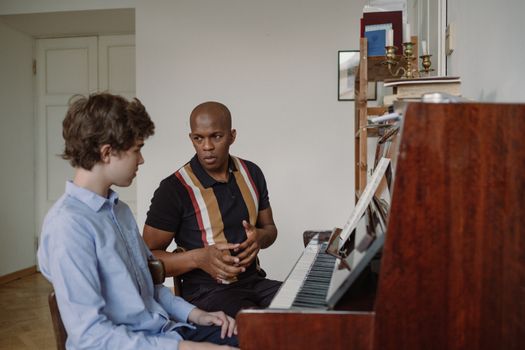
You sit at the edge of your bed in a Defence apartment, watching tutorial videos on your laptop while your younger sister practices scales in the next room. Your undergraduate degree in business administration feels increasingly disconnected from what you actually want to do with your life. The piano your parents bought sits in the corner, and you've been playing since childhood—not with any formal conservatory training, but with enough skill that friends constantly ask you to teach their children. The question burns in your mind: can you actually turn this into a sustainable piano teacher career without the credentials traditional institutions demand?
The answer is yes, but not through the path most people imagine. Karachi's private music education market operates on entirely different principles than formal academic employment. While universities and colleges require specific degrees verified by the Higher Education Commission, private piano instruction follows a demand-based model where demonstrated skill, teaching results, and parent satisfaction matter far more than certificates hanging on your wall. Hundreds of piano teachers across the city have built thriving practices without a single music degree, and the framework they follow is replicable.
This guide maps the exact system you need to establish yourself as a credible, well-compensated piano teacher in Karachi's competitive tutoring landscape. You will learn how to position yourself strategically, build initial credibility without formal credentials, structure your teaching practice, and scale from a handful of students to a sustainable income stream—all while avoiding the costly mistakes that derail most beginners in their first year.
Understanding Karachi's Private Music Education Landscape
Karachi's music instruction market exists almost entirely outside formal institutional structures. Unlike subjects like mathematics or English where school systems and examination boards create standardized pathways, music education in Pakistan remains predominantly a private, family-driven investment. Parents who want piano instruction for their children—whether for personal enrichment, preparation for international curricula like Cambridge or IB that include music components, or genuine artistic development—must navigate a fragmented market of independent teachers, small music schools, and informal networks.
This fragmentation creates opportunity. The absence of regulatory bodies means no licensing requirements, no mandatory qualifications, and no centralized competition. You do not compete against degree-holders from prestigious conservatories because such institutions barely exist in Pakistan's education system. Instead, you compete on teaching effectiveness, reliability, communication skills, and your ability to deliver measurable progress that parents can see and appreciate. The market rewards teachers who understand parent expectations and deliver consistent results over those with impressive but irrelevant credentials.
The geography of opportunity within Karachi matters significantly. Areas like Defence, Clifton, DHA, Gulshan-e-Iqbal, and North Nazimabad contain concentrated populations of middle-to-upper-middle-class families who actively invest in extracurricular education for their children. These neighborhoods support premium pricing and contain parents who view piano lessons as a marker of cultural sophistication and comprehensive child development, not merely as entertainment.
The Credibility Challenge Without Formal Credentials
Your central obstacle is not your lack of a music degree—it is the initial trust barrier. Parents investing money in their child's education want assurance that you can actually teach effectively. Without a degree, you cannot lean on institutional validation, which means you must build credibility through alternative proof points. This challenge is identical to what thousands of tutors face across Karachi's massive private tuition industry, which employs an estimated workforce in the hundreds of thousands despite operating entirely outside formal employment structures tracked by labour force surveys[2].
The credibility gap narrows significantly once you understand what parents actually evaluate when selecting a music teacher. They do not verify qualifications through databases or contact universities to confirm your credentials. Instead, they rely on social proof, demonstrated competence, and perceived professionalism. Your task is to systematically build these three elements before you ever pitch your services to paying clients.
The specific trust signals parents evaluate include:
- Performance ability: Can you sit at a piano and play competently in front of them, demonstrating technical skill and musical understanding that clearly exceeds what their child currently possesses?
- Teaching experience narrative: Do you have a coherent story about whom you have taught before, what results those students achieved, and why you are qualified to teach their specific child's age and skill level?
- Structured curriculum: Can you articulate a clear learning path with defined milestones, showing that you teach according to a system rather than improvising each lesson?
- References and social proof: Can you provide contacts of other parents whose children you have taught, or do you come recommended through trusted social networks?
- Professionalism markers: Do you communicate clearly, arrive punctually, maintain appropriate boundaries, and demonstrate the organizational habits parents associate with effective teachers?
Market Realities and Income Potential
Piano instruction rates in Karachi vary dramatically based on geography, teacher experience, and lesson structure. Beginning teachers in middle-class areas typically charge between Rs. 3,000 to Rs. 5,000 per month for weekly one-hour sessions. Experienced teachers in premium neighborhoods command Rs. 8,000 to Rs. 15,000 per student monthly, with elite instructors teaching exam-level students charging even higher rates. These figures place piano teaching income potential well above many entry-level positions in Pakistan's formal employment sector, where youth unemployment remains a persistent challenge[3].
The mathematics of a sustainable piano teacher career becomes clear with realistic student loads. If you maintain fifteen students at an average rate of Rs. 6,000 per month, your gross monthly income reaches Rs. 90,000—exceeding the starting salaries for many government positions that require years of competitive examination preparation[1]. Twenty students at Rs. 7,000 average generates Rs. 140,000 monthly. These numbers assume you teach from home or travel to students' residences, keeping overhead minimal beyond transportation costs and occasional material purchases.
The private tutoring economy in Pakistan operates as a parallel education system where teaching ability and results matter more than formal credentials. For piano instruction specifically, parents care whether their child can play recognizable pieces and progress visibly—credentials are secondary to demonstrated teaching effectiveness.
The constraint is not market demand but your capacity to manage teaching hours while maintaining instruction quality. Most successful piano teachers cap their student roster between twelve and twenty students, as exceeding this number creates scheduling complexity and reduces the individual attention that drives student results. The income ceiling comes not from lack of clients but from time limitations and the physical and mental demands of teaching effectively across multiple daily sessions.
Building Your Teaching Practice From Home or Studio
You need a functional teaching space, a structured pricing model, and a student acquisition system that costs nothing but time. Your teaching location determines your overhead, your pricing flexibility, and how quickly you can scale from three students to thirty.
Home-based teaching eliminates rent and transforms your largest expense into zero. You need one room with adequate acoustication, proper ventilation, and a door that closes to minimise household interruptions. Position your piano against an interior wall to reduce sound transmission, install curtains or fabric wall hangings to manage echo, and ensure your teaching hours do not conflict with neighbourhood prayer times or family routines. Parents assess your professionalism within the first three minutes of entering your space—a clean, organised room with a dedicated student chair, a music stand, and visible teaching materials signals competence regardless of your credential status.
Studio rental becomes viable once you maintain twelve or more weekly students and your home environment cannot accommodate growth. Shared studio spaces in areas like Clifton, Gulshan-e-Iqbal, and Nazimabad typically cost between PKR 8,000 and PKR 15,000 monthly for part-time access. Calculate your break-even student count before committing: if you charge PKR 3,000 per student monthly and studio rent is PKR 12,000, you need four students solely to cover location costs before addressing your own income needs.
| Teaching Model | Startup Cost | Monthly Overhead | Student Capacity | Best For |
|---|---|---|---|---|
| Home-Based Teaching | PKR 0-5,000 | PKR 0 | 15-20 weekly slots | Beginners testing market demand |
| Shared Studio Space | PKR 10,000-20,000 | PKR 8,000-15,000 | 25-35 weekly slots | Established teachers scaling up |
| Mobile Teaching (Student Homes) | PKR 0 | PKR 3,000-8,000 (transport) | 10-15 weekly slots | Teachers in high-income residential areas |
| Institutional Teaching | PKR 0 | PKR 0 | Determined by employer | Teachers wanting stable monthly income |
Your pricing structure must reflect your experience level, geographic location, and lesson format while remaining competitive within Karachi's unregulated music education market. Beginners without formal credentials typically charge PKR 2,000-3,500 monthly for four weekly 45-minute sessions. Teachers with three or more teaching years and demonstrable student progression command PKR 4,000-6,000 monthly. Premium pricing above PKR 7,000 monthly requires either recognised performance credentials, association with established music schools, or a waitlist proving demand exceeds supply.
Implement tiered pricing based on student age and lesson duration rather than arbitrary skill assessment. Standardise your rates: PKR 2,500 monthly for children (30-minute lessons), PKR 3,500 for teenagers (45-minute lessons), PKR 4,500 for adults (60-minute lessons). This structure prevents pricing inconsistencies that damage your professional reputation when students inevitably compare rates. Require advance monthly payment on the first lesson of each month—weekly payment collection consumes administrative time and creates awkward financial conversations that undermine your authority as the instructor.
Critical Mistakes That Destroy Teaching Careers Before They Begin
Underpricing to attract initial students creates an unsustainable business model and positions you as the budget option rather than the quality choice. Teachers who start at PKR 1,500 monthly believing they will increase rates after gaining experience face intense resistance when implementing necessary price adjustments. Your existing students feel penalised for loyalty, prospective students question why your value suddenly increased, and you remain trapped at below-market rates or lose your entire student base during the transition. Price appropriately from day one based on market research and your legitimate value proposition—your structured teaching system, consistent availability, and genuine investment in student progress justify professional compensation regardless of your credential status.
Accepting students without clear commitment expectations leads to chronic cancellations, irregular attendance, and income instability that prevents sustainable practice growth. Implement a written policy from your first student: four absences annually are permitted with 24-hour notice, lessons missed without proper notice are forfeited, and monthly fees are paid regardless of student attendance. This framework mirrors how schools, universities, and professional institutions operate[1]—students pay for reserved time and instructional access, not merely for lessons attended. Parents respect clear boundaries; they dismiss teachers who operate without them.
Teaching without a structured curriculum plan causes student stagnation and prevents you from demonstrating measurable progress to parents who evaluate whether continued investment produces results. Create a twelve-month progression framework before accepting any students: months 1-3 cover hand position, basic note reading, and simple melodies; months 4-6 introduce both-hand coordination and elementary theory; months 7-9 develop basic technical exercises and expanded repertoire; months 10-12 consolidate skills through performance-ready pieces and fundamental sight-reading. This roadmap allows you to answer the parent question "What will my child achieve this year?" with confidence and specificity. Document each student's progress through video recordings, written assessment notes,
Frequently Asked Questions
Can I become a piano teacher in Pakistan without a music degree?
Yes, most piano students in Pakistan prefer practical teaching skills over formal credentials. Many successful piano instructors are self-taught musicians who demonstrate strong playing ability and teaching methodology.
What is the average piano instructor salary in Pakistan?
Freelance piano teachers in major Pakistani cities earn between PKR 1,500 to 5,000 per hour-long lesson. Full-time instructors with 15-20 students typically make PKR 50,000 to 150,000 monthly depending on location and experience.
Where can I find music teaching jobs in Pakistan as a beginner?
Start by offering home-based lessons through Facebook community groups, OLX classifieds, and neighborhood connections. Music schools in Karachi, Lahore, and Islamabad also hire instructors based on auditions rather than formal qualifications.