Why Pakistan's Growing Veterinary Medicine Career Offers Job Security Most Degrees Don't
Pakistan's livestock sector contributes 60% to agriculture GDP, yet veterinary graduates face minimal competition. This career path combines animal health with food security.
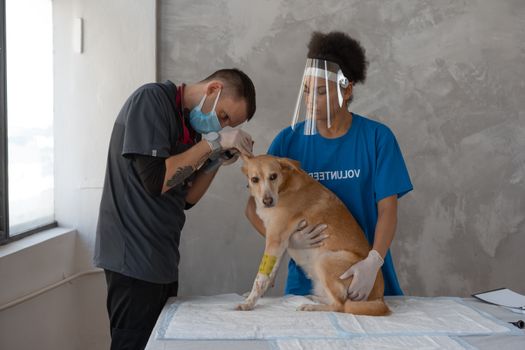
You scroll through job portals and see the same pattern: hundreds of applications for every position, graduates waiting years for interviews, and degree holders working in fields unrelated to their qualification. Meanwhile, a veterinary medicine graduate receives three job offers before completing their final clinical rotation. This disparity reveals something fundamental about career planning that most students overlook until it's too late.
The veterinary medicine career operates under different economic principles than most professions. Where saturation defines law, business, and general medical fields, veterinary medicine faces a persistent shortage of qualified practitioners across Pakistan. This shortage isn't temporary—it's structural, built into the profession's regulatory framework, educational capacity constraints, and the expanding livestock economy that generates demand faster than universities produce graduates.
What makes this profession particularly valuable isn't just current job availability. The veterinary medicine career is anchored to permanent economic realities: a nation's need to feed itself, an agricultural export economy, and public health infrastructure that cannot function without animal disease control. These foundations don't shift with political changes, technological disruption, or economic downturns. They represent the kind of career security that comes from being indispensable rather than merely employable.
The Professional Landscape That Creates Opportunity
Pakistan's veterinary sector exists at the intersection of agriculture, public health, and food security—three domains that receive consistent government investment regardless of which administration holds power. The livestock sector contributes approximately 60% of agricultural GDP and employs millions across rural and urban areas. This economic weight creates a regulatory and professional infrastructure that must be maintained, which translates directly into permanent career positions.
The profession operates through multiple employment channels simultaneously. Government veterinary services employ doctors in livestock departments, disease surveillance systems, quarantine stations, and research institutes. Private practice serves urban pet owners and rural livestock farmers. Corporate positions exist in pharmaceutical companies, feed mills, and poultry integration operations. International organizations require veterinary expertise for development projects. Each channel creates its own hiring pipeline, meaning you're never dependent on a single employer type or vulnerable to one sector's downturn.
What distinguishes this from other healthcare professions is the protected scope of practice. Only registered veterinary doctors can legally diagnose and treat animals, prescribe veterinary medicines, certify animal health for trade, or approve meat for human consumption. This legal monopoly, enforced by the Pakistan Veterinary Medical Council, creates a professional moat that prevents the credential inflation affecting other fields where multiple degree types compete for the same roles.
Why Traditional "Safe" Degrees No Longer Guarantee Employment
The assumption that any professional degree leads to stable employment has collapsed under the weight of graduate overproduction. Pakistan produces thousands of commerce graduates, hundreds of new lawyers, and tens of thousands of general degree holders annually, all competing for a relatively fixed number of positions. The mathematics are brutal: when supply vastly exceeds demand, individual credentials lose value, and personal connections often determine outcomes more than competence.
This saturation creates a secondary problem that many students don't anticipate until they're experiencing it. Even when you secure employment in an oversaturated field, your negotiating position is weak. Employers know that dozens of equally qualified candidates wait behind you, which suppresses starting salaries, limits advancement opportunities, and makes workplace conditions non-negotiable. You become replaceable, which is the opposite of career security.
The veterinary medicine career avoids these dynamics through supply constraints that are unlikely to change:
- Only nine universities offer the Doctor of Veterinary Medicine degree, with total annual output under 1,000 graduates nationwide
- The five-year program with mandatory clinical rotations creates natural educational bottlenecks that prevent rapid expansion
- Pakistan Veterinary Medical Council registration requirements maintain quality standards that limit the number of practicing professionals
- High failure rates in professional licensing examinations further restrict the number of qualified practitioners entering the market[1]
- Geographic distribution requirements mean rural areas face even more severe shortages, creating opportunities in locations other professionals avoid
- Specialization pathways (pathology, surgery, public health) face even tighter supply-demand ratios than general practice
The Numbers That Define Veterinary Career Security
Employment data reveals the structural advantage veterinary graduates hold. While national unemployment figures show concerning trends across multiple sectors, veterinary medicine maintains placement rates that would be considered exceptional in any field. Government recruitment through the Federal Public Service Commission and provincial services regularly advertises veterinary positions that receive fewer applications than available slots—a phenomenon virtually unknown in other professional categories.[1]
The livestock economy generates this demand through measurable expansion. Pakistan maintains one of the world's largest livestock populations, with continuous growth in both subsistence farming and commercial operations. Poultry production has industrialized rapidly, creating corporate veterinary positions that didn't exist a generation ago. Dairy farming is transitioning from traditional to commercial models, requiring professional veterinary oversight for herd health management. Beef and mutton exports to Middle Eastern markets demand certified veterinary supervision for international trade compliance. Each of these trends creates permanent professional positions rather than temporary project work.
The veterinary profession represents one of the few career paths where geographic mobility becomes an advantage rather than a requirement. While most graduates compete for limited urban positions, veterinary doctors find abundant opportunities in rural and peri-urban areas where livestock concentration is highest and professional availability lowest. This inverts the typical career calculus where rural posting is seen as exile rather than opportunity.
Labour force statistics consistently show lower unemployment rates for veterinary graduates compared to general graduate populations.[2] More significantly, the time-to-employment metric—how long graduates wait before securing their first professional position—favors veterinary doctors substantially. Where other professional graduates may wait months or years, veterinary graduates typically transition directly from clinical rotations to employment, often with multiple offers. This isn't luck or exceptional networking; it's the natural outcome when qualified professionals are scarce relative to demand.
How to Position Yourself for Maximum Career Security in Veterinary Medicine
The difference between veterinarians who build secure, financially rewarding careers and those who struggle often comes down to strategic positioning during and immediately after their degree. You need to understand that a DVM degree alone does not guarantee job security—your choices about specialization, practical experience, and professional network determine whether you command a premium salary or compete in an oversaturated segment.
Start by identifying high-demand specializations before your final year. Large animal practice, poultry health management, and dairy farm consultancy face acute shortages of qualified professionals, while companion animal practice in major cities attracts disproportionate competition. Your internship selections during fourth and fifth year should deliberately expose you to livestock systems, pharmaceutical quality control, and government diagnostic laboratories—the sectors offering the most stable employment trajectories. Build relationships with faculty members who maintain active consultancy practices or hold positions in regulatory bodies, as these connections frequently lead to opportunities that never reach public job postings.
Equally important is acquiring certifications that complement your degree. Pakistan Veterinary Medical Council registration remains mandatory, but additional credentials in Good Manufacturing Practices (GMP), disease surveillance systems, or livestock business management substantially increase your marketability. Provincial livestock departments and federal agencies including the Ministry of National Food Security prioritize candidates who demonstrate both clinical competence and understanding of agricultural economics.
| Career Path | Job Security Level | Entry Barriers | Income Potential | Strategic Advantage |
|---|---|---|---|---|
| Government Veterinary Officer (BPS-17) | Very High | FPSC/PPSC competitive exam | Stable, pension-secured | Lifetime employment, predictable growth |
| Corporate Poultry/Dairy Veterinarian | High | Internship experience essential | Higher than government, performance-based | Industry growth directly creates positions |
| Pharmaceutical/Feed Industry (QC/QA) | High | GMP certification preferred | Competitive, international standards | Regulatory requirements mandate veterinary oversight |
| University Faculty/Research | Very High | Graduate degree (M.Phil/PhD) required | Moderate base, consultancy supplements | Academic tenure, research funding opportunities |
| Private Small Animal Practice (Urban) | Moderate | Capital investment for clinic | Variable, market-dependent | Growing pet ownership, but saturated in major cities |
| Livestock Consultancy (Rural) | High | Field experience, local credibility | High for established practitioners | Minimal competition, essential service |
Critical Mistakes That Undermine Job Security in Veterinary Careers
The most damaging mistake you can make is treating your DVM program as purely academic training while neglecting practical skills and professional connections. Many graduates emerge with strong theoretical knowledge but cannot perform routine field procedures, diagnose diseases under resource-constrained conditions, or communicate effectively with livestock farmers who constitute the majority of your potential clients. This gap between classroom learning and workplace requirements delays employment and forces you into lower-tier positions that experienced practitioners could have avoided.
Another common pitfall involves geographical inflexibility and unrealistic sector preferences. If you limit your job search exclusively to companion animal clinics in Lahore, Karachi, or Islamabad, you compete against hundreds of similarly qualified candidates for a handful of positions. Meanwhile, livestock-dependent districts across Punjab, Sindh, and Khyber Pakhtunkhwa struggle to fill veterinary positions that offer immediate employment, substantial autonomy, and often superior earning potential once you establish your reputation. Government positions advertised through the Federal Public Service Commission[1] and provincial service commissions frequently receive fewer qualified applicants than available posts in rural cadres, creating opportunities that urban-focused graduates systematically overlook.
Equally problematic is delaying professional registration and continuing education. Your Pakistan Veterinary Medical Council registration should be completed immediately after graduation, not months later when you finally begin job applications. Employers interpret registration delays as lack of seriousness about the profession. Similarly, failing to pursue short-term certifications, attend veterinary conferences, or maintain awareness of emerging diseases and treatment protocols signals
Frequently Asked Questions
What universities in Pakistan offer veterinary studies programs?
The University of Veterinary and Animal Sciences Lahore, Sindh Agriculture University, and University of Agriculture Faisalabad offer DVM degrees accredited by the Pakistan Veterinary Medical Council. These five-year programs include clinical training and internships at livestock farms.
How does veterinary medicine connect to food security jobs in Pakistan?
Pakistan's 200 million livestock population produces 60% of agricultural GDP through meat, milk, and dairy products. Veterinarians ensure animal health, disease control, and safe food production, making them essential to national food security initiatives.
What is the average salary for veterinary medicine graduates in Pakistan?
Entry-level veterinarians in Pakistan earn PKR 50,000-80,000 monthly in government positions, while private practitioners and livestock consultants can earn PKR 100,000-200,000. Positions with international NGOs and food security organizations offer even higher compensation.